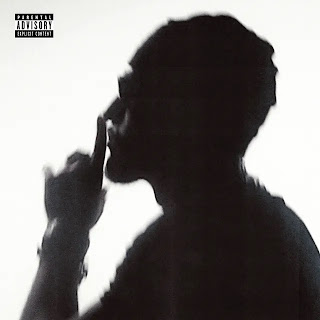
“ON NOTHING” is built around a repeated phrase that functions less like an explanation than a verdict. The speaker keeps declaring that opponents are not operating at his level, while the chorus surrounds those claims with money, clothes, cars, and movement. The song's meaning comes from the pressure of that repetition: confidence has to be stated again and again to keep the outside world away.
Repetition as armor
The chorus returns to the same central phrase until it becomes a rhythmic wall. It separates the speaker from people he considers weak, dishonest, or irrelevant. That separation is reinforced by the production-minded writing: short bursts, ad-libs, and repeated fragments keep the song moving before any doubt can settle.
The repeated denials also reveal how much the speaker is responding to other people. A person who truly has no interest in rivals would not need to keep naming them. The song therefore presents independence as an active performance. The voice is free because it continually announces that it cannot be controlled.
Wealth and control
Luxury images appear throughout the chorus: expensive clothing, black diamonds, a large car, and bags accumulating beyond control. These details do not form a story about one purchase. Together, they create a visual language of excess. The speaker's success is imagined as something that spills over its containers.
Money is also connected to movement and access. People are expected to appear when the speaker lands, return when called, and stay close to the momentum. That creates a world in which wealth changes the rules of attention. The speaker does not wait for invitations; he assumes that the environment will adjust around him.
Independence and distance
The clearest personal statement in the song is the repeated claim that nobody is needed. This is stronger than ordinary confidence. It turns distance into a form of safety. Friends, rivals, and critics are all treated as possible sources of interruption, so refusing dependence becomes a way to protect the persona.
The verse extends that boundary through insults and threats. The point is not to describe a specific conflict in detail. It is to make the speaker's world feel difficult to enter. Anyone who wants access must first pass through the language of dismissal.
Final interpretation
“ON NOTHING” can be read as a study in defensive confidence. The speaker claims total control, but the intensity of the repetition suggests that control must be constantly performed. Wealth provides symbols of power, while isolation prevents anyone else from defining the speaker's value.
The song does not offer a quiet resolution. It ends by circling back to the same phrase, as if the persona can remain secure only while the chant continues. Its force lies in that loop: “nothing” becomes a boundary, a boast, and a refusal to let anyone else set the terms.
This article is an original interpretation based on the supplied song metadata and lyrics. It does not reproduce the full lyrics.
Read the full lyrics and credits on Genius.