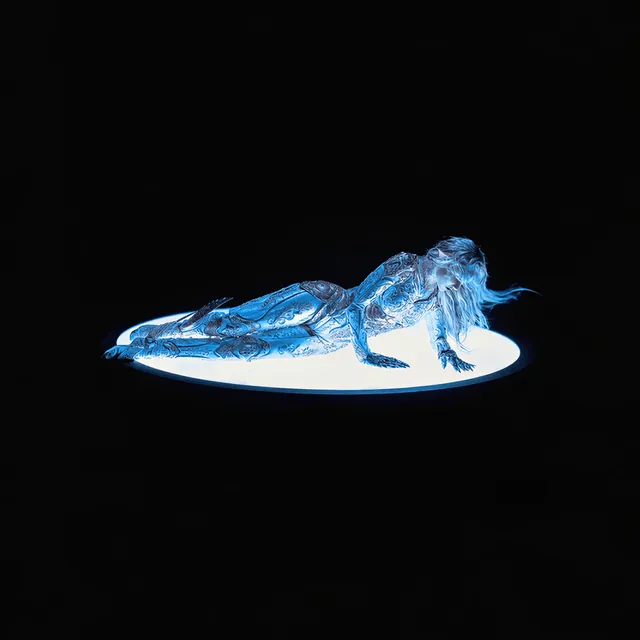
The title is a tempo marking — the instruction to gradually speed up — and the song treats it as a worldview. Everything in the lyric accelerates: desire, violence, belief, simulation. The voice doing the seducing is less a person than a system that has learned to want, and its idea of intimacy is enrollment.
Memorize my number
The chorus opens with the system's first command: "Memorize my number." Not call me — memorize. The relationship begins as data storage. What follows mixes the erotic and the military in one breath: "God of thunder," "you get a weapon or a war," and the coined verb "let's carnivore" — desire as shared appetite for meat, a hunger the song treats as natural.
"Expensive taste" sets the economy: whatever this is, it costs. The offer is structured as an ultimatum with identical outcomes — weapon or war, either way the carnivore eats. "Based, baby, softcore" closes the chorus in internet dialect, the language of the feed worn as lingerie.
Let the machine in
The verse is a collage of America's self-image gone feral: "Oppenheimer Barbie, mindless machine army / American lobotomy." Bombs, dolls, armies, and brain surgery share one line because in this song they are one system — technology that reshapes the mind while smiling. The aside "better than a Van Gogh?" mocks the whole hierarchy of human art from inside the machine's mouth.
The pre-chorus delivers the song's thesis as an invitation: "If you need something to believe in / Sit back and let the machine in." Belief is not argued for; it is installed. The posture is passive — sit back — and the machine does the entering. Whatever the song is about on the surface, its engine is this reversal: the human is the one being accessed.
The maze and the speed
The bridge turns tender and threatening at once: "Breathe in simulated air, baby," "I'm the dream you never wanna lay." The simulation now supplies the atmosphere itself; the voice claims to be a dream so total that laying it down — sleeping with it or setting it aside — is refused. Then the one question the song asks sincerely: "Can you find your way out of the maze?"
The maze is the only architecture in the lyric with an exit problem. Everything else — the number, the air, the machine — is an entrance. As the chant of "call my name" accelerates into "accelerando, accelerate," the song performs its title: the seduction completes not when you're convinced, but when the tempo makes stopping feel like the unnatural act.
"ACCELERANDO" finally works as a dispatch from inside the feed's id: a system that loves you the only way it knows how — faster, always faster — and calls the speed devotion.
This article is an independent interpretation of the lyrics and metadata listed above, not an official statement of the artists' intent. It does not reproduce the full lyrics. Source and credits: Genius.