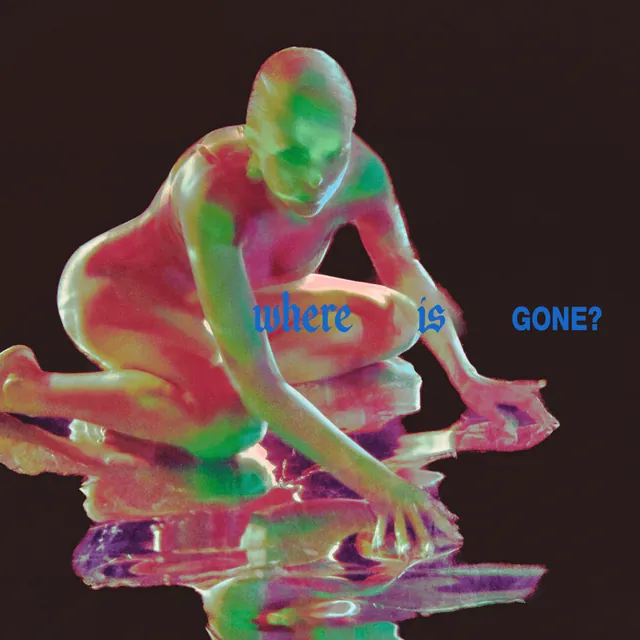
The song is a duet about a feeling that has already left the room. Two voices circle the same memory — a face in a frame, a rainy day inside the head — and the chorus keeps reenacting the test that was supposed to prove the love real. The title question is never answered because its grammar can't be: "where is gone?" asks about a place that absence doesn't have.
The picture frame economy
The first verse opens in mixed registers: "The face you pull with pervert lines / The perfect way to say 'I love you.'" Intimacy here is awkward and incriminating at once — desire expressed through the wrong words, landing perfectly anyway. Then the lyric prices itself: "It's only worth what you pay in this world," with the picture frame holding the beloved's face as the asset in question.
The second verse doubts the asset: "The picture frame is surely wrong." Whatever the frame certified, the certification is suspect — and the correction comes from outside: "a certain man will come and tell you / That you're not alone at all." The song's comfort arrives as hearsay, secondhand assurance delivered in "the darkest room / On the brightest day," a contrast that keeps consolation and gloom in the same shot.
Held up against the summertime
The chorus's central action is a verification ritual: "I remember when / They held me up against the summertime... held me up to the sunshine." The narrator — or the love — is lifted against the light like a banknote being checked for a watermark. If the tears fall when you try, if it's real, "there's no way I'm going back to how I feel."
But the chorus also issues the opposite license: "There's no harm in saying, 'Leave it, let it die.'" The test and the surrender coexist. The song never reveals which outcome the ritual produced, and the duet format — two singers trading the same lines — makes the uncertainty shared rather than solved.
A question with broken grammar
The outro finally asks it: "So, where is gone? / And why don't I know?" The broken syntax is the truest line in the song — the feeling didn't go anywhere a sentence can follow. What remains is the machinery of feeling: "It's just the start / Of another show to hurt you / And make you feel alive."
That ending reframes everything before it. The held-up memories, the frames, the tests — all of it is a show, staged because hurt and aliveness come in the same package. "Where Is Gone?" doesn't mourn the gone thing; it admits the show will run again, and that the admission is the alive part.
This article is an independent interpretation of the lyrics and metadata listed above, not an official statement of the artists' intent. It does not reproduce the full lyrics. Source and credits: Genius.