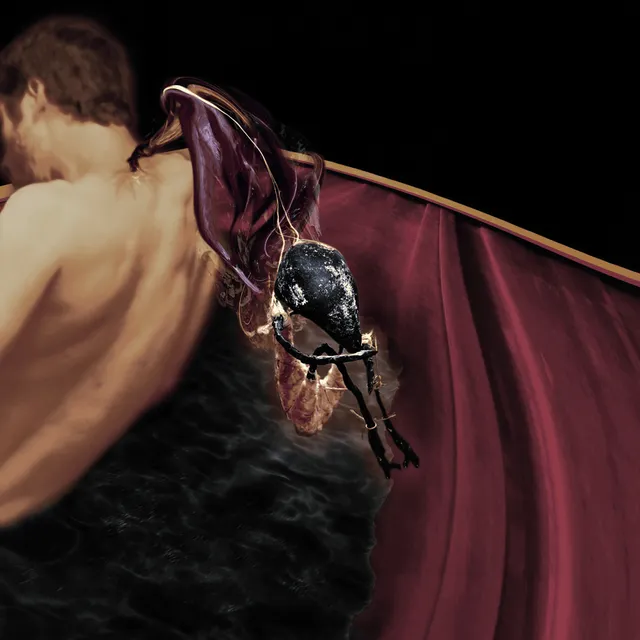
“madeleine” explores pain that seems to speak through an elusive, almost magical figure. The narrator is drawn toward her power to uncover something hidden, while the lyric repeatedly questions whether apparent knowledge is actually a projection of fear or loss.
A fragile account of the self
The opening makes the speaker's interests dependent on hers before identifying who she is. That alignment could be care, but it also raises the possibility that the narrator has surrendered the ability to judge a need independently. The broken-book imagery that follows gives the relationship to the self a damaged structure: pages are no longer securely held by a spine.
The fortune-teller image then separates anticipation from understanding. A worried person can expect hurt and still be caught by it. Calling the prediction not wisdom
challenges the idea that expecting disaster makes someone an authority on their own experience. Fear can feel perceptive without explaining what is happening.
What comes out of the wound
The chorus offers entry and exposure at the same time. The figure draws a card from what remains at the bottom, then opens an existing scar. She appears to recover something discarded or concealed, but the procedure is invasive rather than gently reassuring.
What emerges is smoke saying the name Madeleine. That is different from simply introducing a character who arrives from elsewhere: the name rises out of a wound. The imagery supports reading her as connected to unresolved feeling or memory, although it does not prove that she is only an abstraction. A real addressee and a symbolic figure are both possible; the text does not supply a biography to choose between them.
The second verse enlarges her powers through fairy-tale logic. Teaching foxes cunning and turning spilled ink into a darkened sky make her seem capable of shaping both behavior and the world through which the narrator moves. Yet searching a landfill for phantoms returns that grand power to discarded material. She makes presences out of remnants, not out of a secure account of the past.
Whose eyes are in the mirror?
The bridge changes the question from what she can reveal to how the speaker has been seeing. The fever and disease belong to the song's figurative language; they are not medical advice or evidence of a diagnosis. Their role is to suggest that the problem cannot be resolved while its nature is misunderstood.
The widowed angel
makes the final mirror image especially uneasy. An angel suggests an elevated or protective viewpoint, but widowhood marks that viewpoint with loss. Looking at oneself through such eyes can make grief seem like an objective verdict. The lyric does not establish an actual death; it gives the gaze itself a bereaved character.
The chorus returns without identifying Madeleine or closing the wound. That lack of resolution is integral to the song: the narrator can begin to question the lens through which pain is understood without yet being able to set it aside.
This is an independent interpretation of the lyrics, not an official explanation or an account of the artist's private life. Read the source lyrics on Genius.