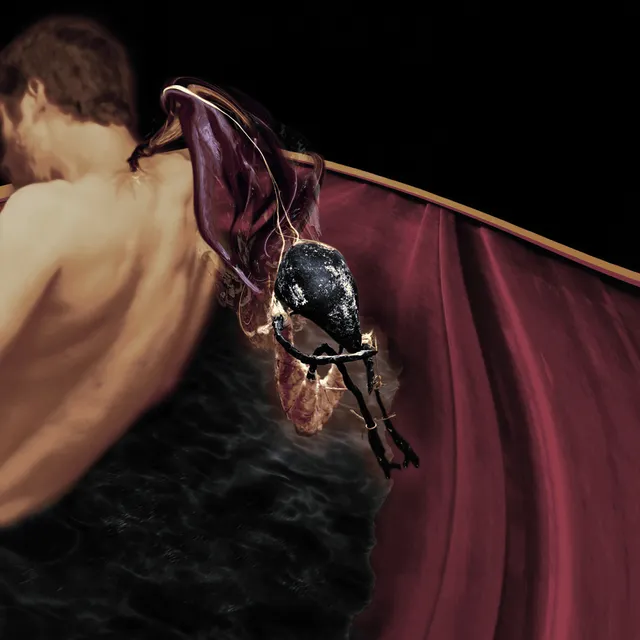
“jesteR” turns amusement into a threat: the figure who keeps people entertained also manipulates them and wears away their sense of self. The narrator sounds an alarm, but the opening offers and shared signs of guilt prevent a simple division between an innocent observer and an evil outsider.
A show that becomes a trap
The title's jester belongs to a field of tricks, juggling, games, and spectacle. A spinning wheel suggests chance; betting, cards, and a pawn make the listener part of a contest controlled elsewhere. These images do not identify one real institution. Together they describe an arrangement in which the promise of entertainment disguises a loss of agency.
The movement from a joke to bodily capture is especially important. What first seems funny becomes a situation where the addressed person helps set their own trap. The baton makes participation look like an opportunity passed along, while the pawn reduces the participant to something another player moves. Advancement and exploitation become difficult to separate.
The price is a name
The repeated accusation Corrupting the kids
gives the danger a vulnerable target. Yet the consequences are more specific than a general complaint that entertainment is bad. The threat of forgetting a middle name turns damaged attention into damaged identity: the spectacle does not merely waste time but threatens the details by which a person knows themselves.
That threat also changes the meaning of the opening survival claim. Remaining present is not necessarily the same as remaining intact. Later, the final chorus breaks off during the threatened loss of the name. On the page, the incomplete phrase gives the warning an enacted form rather than only repeating it.
The witness is not outside
The first verse offers to satisfy cravings and lets the addressee choose. Its grotesque combination of a coffin and Vegas makes the sales pitch feel dangerous before the recurring male figure takes over the warning. Meanwhile, the repeated smoking gun
is not assigned exclusively to one guilty party.
Those details keep the narrator's position unstable. The speaker may be exposing manipulation while also borrowing its language of instant gratification. That does not prove a particular confession; it means the lyric has already made complicity harder to escape than simply pointing at a villain.
Roots instead of distraction
The bridge moves from being carried by a mother toward confronting disorder. Digging beneath damaged focus asks for causes rather than another diversion, while valuing the weight one carries treats responsibility as something worth keeping. The danger is not solved by becoming weightless: losing that burden is associated with becoming nameless.
The return of the accusation prevents this advice from becoming a clean rescue. “jesteR” offers resistance as the difficult work of retaining attention and identity inside a game that still wants both, not as proof that the narrator has already escaped it.
This is an independent interpretation of the lyrics, not an official explanation or an account of the artist's private life. Read the source lyrics on Genius.