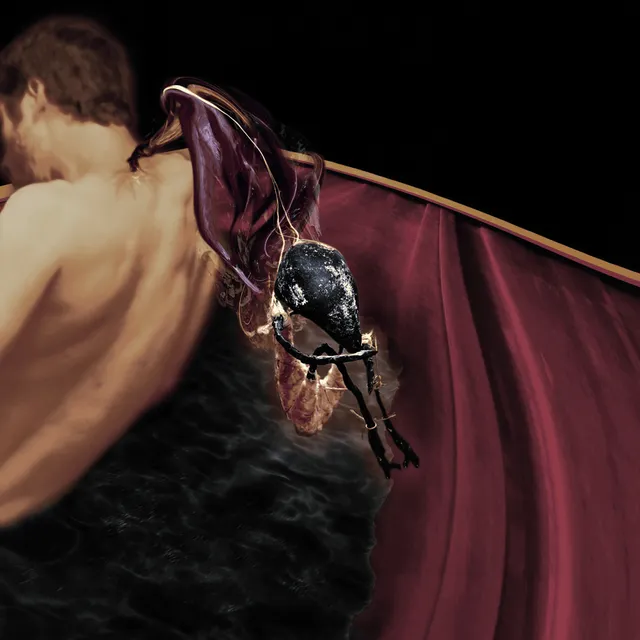
“do what you can” follows a narrator trying to keep acting when the structures that usually provide reassurance fall away. Its modest instructions about breathing and taking steps are tested by judgment, abandonment, and an encounter with a troubling figure who may belong to the narrator's own divided self.
Gratitude does not end the struggle
The opening acknowledges good fortune without claiming that fortune removes difficulty. A late-night attempt to sing honestly to someone contrasts with memories of being unable to open a door. Movement is already an achievement, but one that can be forgotten once it becomes familiar.
The chorus narrows the task to step by step
. Keeping feet steady and regulating breath do not fix the hollow ground underneath; they make action possible while uncertainty remains. Allowing an effigy to burn similarly separates the speaker from a public representation that others can attack. The image can be destroyed without determining the whole person.
A trial on an empty stage
The gavel brings judgment into the chorus, and the next verse describes answering before even knowing the accusation. That reversal makes self-defense feel impossible: the demand for an explanation precedes a clear statement of what supposedly went wrong.
The deserted audience and falling curtain extend the problem into performance. There is no stable crowd left to persuade, yet the narrator is still caught in the scene. As the stage itself sinks, even the place from which an answer might be delivered becomes unreliable.
Against that collapse, the initially interrupted promise to know something is later completed as knowing oneself. This is a smaller, more internal standard than winning the room. The narrator may not control a verdict but still needs an account of who is being judged.
The child who will not look up
A child offers a secret on the condition that the narrator stay close. Avoiding eye contact while daring someone to approach combines a wish for contact with resistance to it. The narrator wants to flee the scene but cannot bear to abandon the child.
Nothing establishes this as a literal remembered event. Within the collapsing theater, the child can be read as a vulnerable part of the speaker that cannot simply be left behind. That reading becomes more plausible when a mirror later enters the exchange, but the lyric does not settle the figure's identity or authorize a specific childhood backstory.
Help without a clean cure
The question Is it okay if I need help?
interrupts any expectation that perseverance must be solitary. The speaker is still breathing, but also lonely, frightened, and unsure of what can be repaired. Asking for help does not cancel the earlier effort; it acknowledges its limits.
In the final exchange, the instruction to stop evading the present becomes more urgent. Good intentions are insufficient if the person keeps delaying action. Yet the answering voice complicates that demand by claiming to be both a source of drag and a condition of getting anywhere.
The song ends without resolving that contradiction into a victory speech. Doing what one can means moving with a difficult self, not waiting to replace it with a fearless one. The breathing, the request for help, and the refusal to abandon the child all point toward that less tidy form of persistence.
This is an independent interpretation of the lyrics, not an official explanation or an account of the artist's private life. Read the source lyrics on Genius.